
Branding companies in Kenya play a much bigger role than simply printing a logo on a T-shirt or designing a quick business card. For a growing business, a branding partner helps translate strategy into something customers can see, remember, trust, and act on. In Nairobi, Mombasa, Kisumu, Nakuru, Eldoret, Thika, and many other commercial centers, companies compete for attention in markets that are fast moving, price sensitive, and increasingly digital. A professional brand presence helps a business look credible before the first meeting, create consistency across every customer touchpoint, and make sales teams feel more confident when they go out into the market.
This guide explains what to look for when comparing branding companies in Kenya, which services matter most, how to judge quality, and how to plan a branding project that delivers real business value. Whether you are launching a startup, refreshing an established company, branding staff uniforms, printing promotional products, preparing for an expo, or building a full corporate identity system, the right provider can save you time, protect your reputation, and make your budget work harder.

What branding companies in Kenya actually do
A strong branding company brings together design thinking, production knowledge, material sourcing, printing expertise, and project management. Some clients first approach a branding firm because they need a logo, but a complete provider can support far more than a visual mark. The best teams help businesses build a brand system that works across digital profiles, office signage, corporate stationery, staff clothing, packaging, vehicle branding, roll-up banners, marketing collateral, exhibition booths, giveaways, and customer service materials.
In practical terms, a branding company should help you answer five questions. What should customers remember about your business? How should the brand look and sound? Which items should carry the brand first? Which materials will last in the Kenyan environment and within your budget? How can production be managed so the final output looks consistent across many items? When a company can answer these questions with confidence, you are not just buying printed products. You are buying clarity, recognition, and trust.
Kenyan businesses often need branding for several reasons at once. A new company may need identity design, business cards, signage, social media graphics, email signatures, and branded launch materials. A school may need uniforms, directional signs, badges, diaries, and event banners. A hotel may need menus, room signage, staff name tags, packaging, and promotional merchandise. A corporate team may need branded shirts, notebooks, lanyards, roll-up banners, teardrop flags, vehicle decals, and conference giveaways. Good branding companies in Kenya understand these real use cases and can recommend a practical order of priority.
Why professional branding matters in Kenya's competitive market
Kenya has an energetic business environment. Customers compare options quickly, social media makes first impressions public, and many buying decisions are influenced by visual trust. A company with inconsistent colors, unclear signage, low quality print, or poorly finished uniforms can look less reliable than it actually is. On the other hand, a brand that looks organized and intentional can create confidence even before a customer speaks to the team.
Professional branding matters because it reduces friction. A clear shop sign makes your premises easier to find. A polished roll-up banner helps your booth stand out at an exhibition. Branded delivery packaging reassures customers that their order came from the right supplier. Staff uniforms make your team visible at events and in busy retail environments. A properly designed profile or brochure helps salespeople explain your offer with less effort. These small points add up to a stronger customer experience.
Branding also improves internal alignment. When employees wear consistent uniforms, use standard email signatures, hand out professional business cards, and share approved marketing material, the company starts to feel more organized. This matters for SMEs as much as it matters for large organizations. A small company can look serious, prepared, and ready for bigger contracts when its brand presentation is handled properly.
Core services offered by branding companies in Kenya
Not every provider offers the same service mix, so it helps to understand the main categories before requesting quotes. The first category is brand identity design. This can include logo design, color palettes, typography, brand guidelines, company profiles, stationery design, presentation templates, digital banners, and social media assets. These services create the foundation that all later production work should follow.
The second category is print and production. This includes business cards, flyers, brochures, booklets, posters, folders, stickers, labels, receipt books, calendars, diaries, notebooks, packaging, menus, certificates, and branded envelopes. A reliable print team should advise on paper stock, finishing, lamination, binding, sizes, turnaround time, and the difference between short-run digital printing and larger offset production.
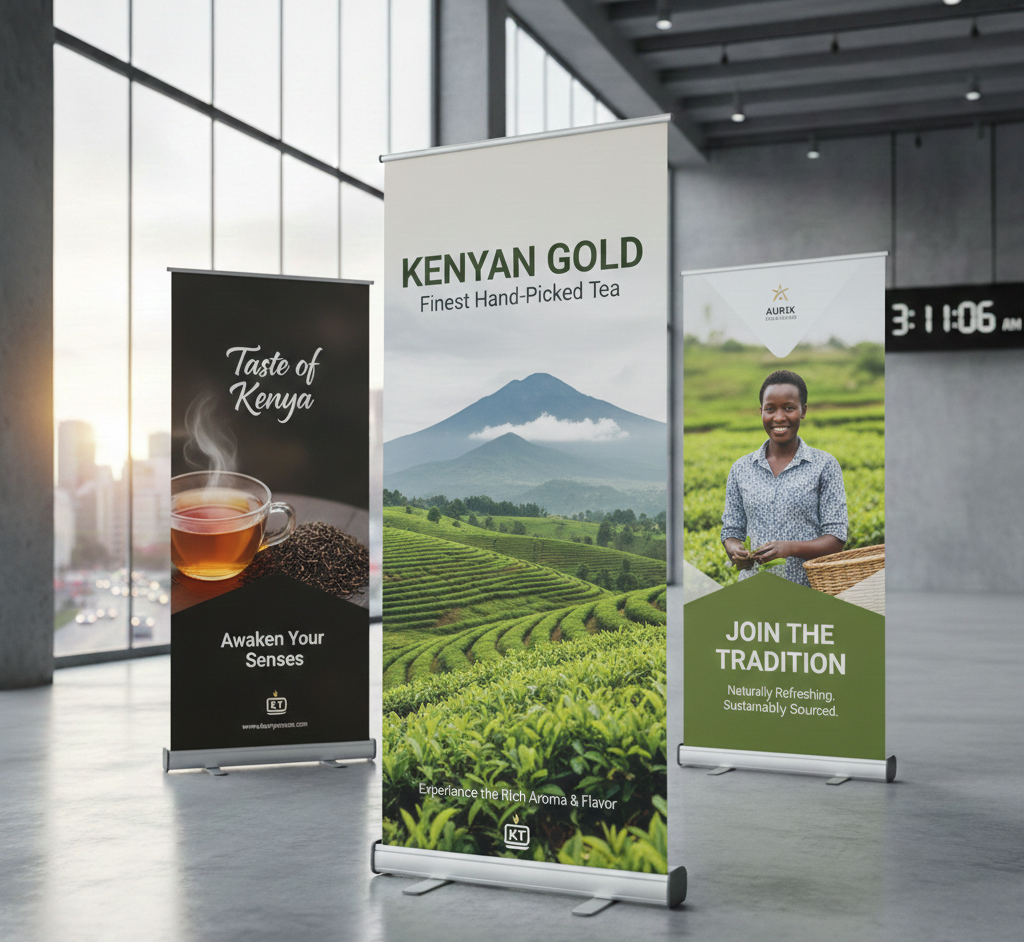
The third category is signage and display. Many branding companies in Kenya produce shop signs, reception signs, 3D lettering, acrylic signs, safety signs, directional signs, banners, roll-up banners, tear-drop flags, exhibition stands, backdrops, wall graphics, window graphics, and vehicle branding. This work requires accurate measurements, installation planning, weather resistant materials, and an eye for visibility at different distances.
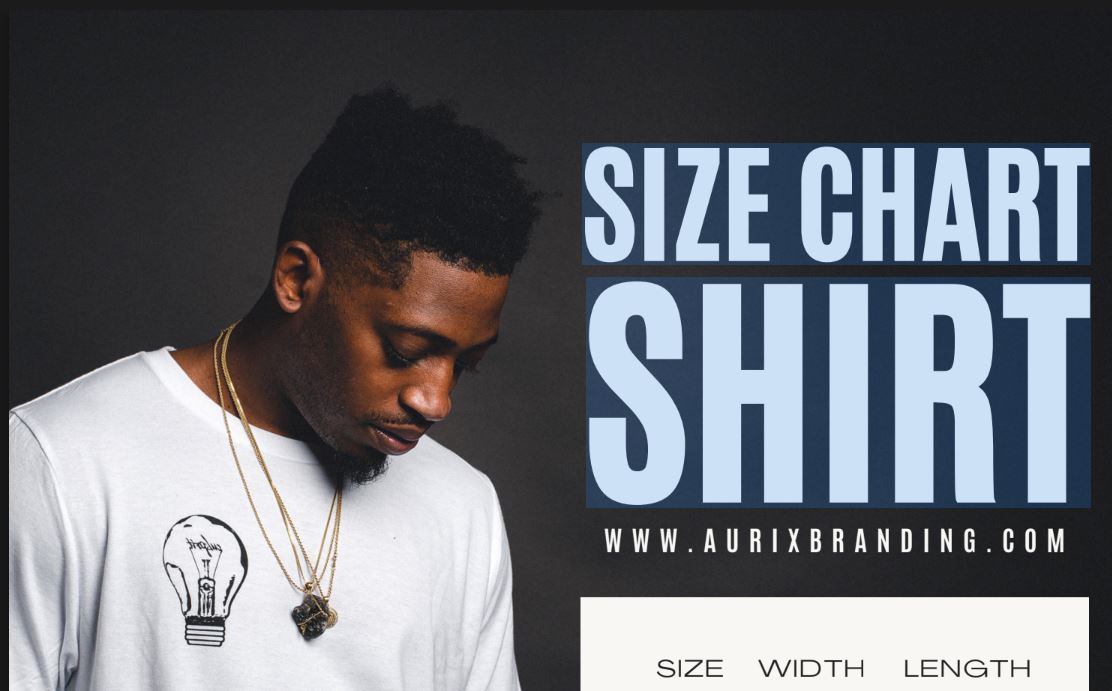
The fourth category is corporate apparel and uniforms. This includes embroidered shirts, printed T-shirts, polo shirts, hoodies, jackets, caps, overalls, aprons, hospitality uniforms, sports kits, and branded safety wear. Apparel branding is one of the most visible forms of company identity, but it is also one of the easiest to get wrong. The fabric, print method, embroidery quality, sizing, wash resistance, and color matching all affect the final result.
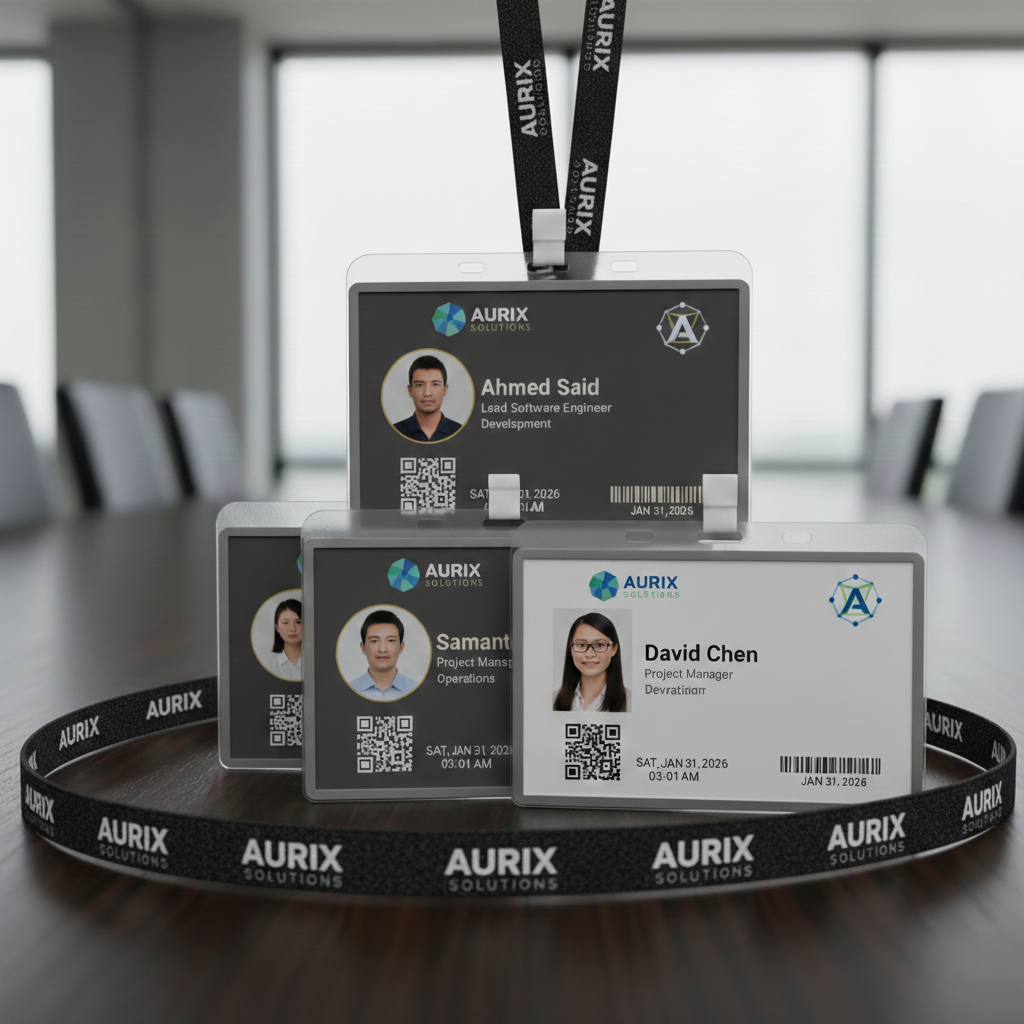
The fifth category is promotional merchandise. This includes pens, mugs, notebooks, lanyards, badges, umbrellas, power banks, tote bags, bottles, key holders, wristbands, gift sets, USB drives, and awards. Promotional items are useful because they keep your brand close to customers, partners, staff, and event attendees. The best items are practical, durable, and aligned with the audience. A premium client gift should not feel like a disposable giveaway, while a mass event giveaway should be affordable and easy to distribute.
How to compare branding companies in Kenya
Choosing a branding provider should not be based on price alone. Low prices can be attractive, especially when budgets are tight, but poor production often costs more in the long run. Reprinting a banner, replacing uniforms, correcting signage, or apologizing for delayed event materials can be more expensive than choosing a reliable partner from the beginning. A better approach is to compare quality, communication, turnaround time, service range, and proof of past work.
Start with the portfolio. A serious branding company should be able to show examples of print work, apparel, signage, and promotional items. Look closely at finishing, color consistency, alignment, image clarity, and the kind of clients they have served. A portfolio does not have to be filled with famous brands to be useful. What matters is whether the work looks neat, intentional, and suitable for real business use.
Next, evaluate their discovery process. Good branding companies ask questions before quoting. They want to know the purpose of the project, the quantity required, where the items will be used, the deadline, the target audience, and whether artwork is ready. If a company quotes instantly without understanding the job, you may receive a price, but you may not receive the right solution. For example, outdoor signage needs different materials from indoor display signage, and uniforms for field teams need different durability from shirts used for a one-day activation.
Communication is another important signal. You want a provider that confirms specifications clearly, responds within reasonable time, explains options, and shares proofs before production. A proof is not a formality. It is the stage where spelling, colors, placement, sizing, and layout are checked before money is committed to production. If a supplier rushes past proof approval, mistakes become more likely.
Also check whether the company can handle both design and production. Some businesses already have artwork and only need printing. Others need support from concept to final delivery. A partner that can manage the full workflow is often easier to work with because the designer understands production limits and the production team understands the intended design outcome. This reduces the gap between what you approved on screen and what appears on the final product.
Important questions to ask before placing an order
Before choosing among branding companies in Kenya, ask direct questions. What production method will be used? What material is recommended and why? Can you see a sample? How long will production take after artwork approval? Is delivery included? Who checks the final items before dispatch? What happens if there is a production defect? Are installation services available for signage or vehicle branding? Can the company support repeat orders later?
For apparel, ask about fabric weight, available sizes, embroidery thread colors, print method, wash care, and whether sample sizes can be checked before a large order. For signage, ask about measurements, mounting method, weather resistance, lighting, permits where applicable, and installation safety. For print items, ask about paper stock, lamination, folding, binding, and color proofing. For promotional items, ask about minimum order quantities, branding area, durability, and packaging.
These questions help you avoid surprises. They also show the supplier that you value quality and accountability. A professional company will welcome specific questions because clarity makes the project easier for everyone.
Local experience matters
Working with a branding company that understands the Kenyan market can make a major difference. Local experience helps with sourcing, pricing, timelines, installation conditions, popular event formats, and the practical expectations of Kenyan customers. A company serving Nairobi clients, for example, may be used to tight corporate deadlines, last-minute event requests, and multi-location deliveries. A company working with schools, NGOs, churches, manufacturers, hotels, clinics, or retail brands will understand the different production needs of each sector.
Local knowledge also helps with material choice. Outdoor signage must withstand sun, dust, and rain. Apparel should match the climate and the working conditions of the staff. Print items should be finished in ways that survive handling, transport, and repeated use. Promotional items should fit the buying habits and expectations of the target audience. A branding partner that understands these details can guide you away from products that look good online but fail in daily use.
Brand strategy before production
Many businesses jump directly into production before clarifying their brand strategy. They choose a color because it looks nice, print items because competitors use them, or order merchandise because an event is approaching. While action is important, strategy prevents waste. Before you print, define what your brand should communicate. Are you premium, accessible, fast, technical, youthful, traditional, corporate, playful, or community focused? Which customers are you trying to attract? What promise should they remember?
Once the strategy is clear, production choices become easier. A law firm may need restrained colors, elegant stationery, office signage, and professional profiles. A youth fashion brand may need bold apparel, social media graphics, packaging stickers, event backdrops, and influencer kits. A construction company may need safety signage, vehicle decals, helmets, overalls, site boards, and durable staff identification. A hospitality business may need menus, uniforms, room signage, packaging, and guest-facing promotional items. The best branding companies in Kenya help you connect strategy with practical execution.
This is also where digital visibility becomes important. A strong offline brand should connect with your website, search presence, and online campaigns. For businesses that want their branding to support long-term online growth, a specialist such as Reisen SEO can help align search visibility, content planning, and conversion strategy with the visual identity customers see offline. When branding and search work together, your company is easier to recognize and easier to find.
Budgeting for branding services
Branding budgets vary widely because projects differ in quantity, material, size, finish, design complexity, and urgency. A simple batch of business cards is very different from a full rebrand with signage, uniforms, vehicle graphics, packaging, and promotional merchandise. Instead of asking only for the cheapest quote, build a budget around priority and impact.
Start with essentials. For many small businesses, the first essentials are a strong logo, a clear color system, business cards, basic stationery, signage, social media graphics, and a simple company profile. For a retail or service business, uniforms, shop signage, packaging, and branded receipts may be more urgent. For a company attending exhibitions, roll-up banners, brochures, staff shirts, table branding, and giveaway items may deliver the highest immediate value.
It is also wise to budget for artwork preparation. Poor artwork can delay production or reduce print quality. A low-resolution logo downloaded from WhatsApp is not suitable for large signage or embroidery. Professional branding companies will ask for vector files where possible, such as AI, EPS, PDF, or SVG. If you do not have proper files, they may need to redraw or clean the artwork before production. Paying for proper artwork is not a luxury. It protects every future branding investment.
Finally, consider repeatability. If you will reorder uniforms, packaging, labels, or promotional items later, ask the supplier to keep your specifications on file. This includes colors, sizes, material types, design files, and production notes. Repeat orders become easier when the supplier has a clear record of what was approved before.
Quality indicators you should never ignore
Quality branding is visible in the details. On printed materials, look for sharp text, clean images, accurate trimming, smooth lamination, correct folds, and consistent color. On apparel, check whether the print is properly positioned, whether embroidery is neat, whether thread colors match the brand, and whether garments feel comfortable. On signage, check alignment, mounting, lighting if used, material thickness, edge finishing, and readability from a realistic distance.
Consistency is just as important as individual quality. If your logo appears in different shades on every item, the brand starts to feel fragmented. This is why brand guidelines matter. Even a simple one-page guide with logo versions, color values, fonts, spacing rules, and usage examples can prevent repeated mistakes. A good branding company can help create or follow these guidelines.
Another quality indicator is how the company handles deadlines. Branding work often connects to events, launches, tenders, school openings, recruitment drives, exhibitions, or campaigns. Missing a deadline can make the entire project useless. Ask for realistic timelines and give approvals quickly. A professional provider should be honest about what can be done well within the available time.
Branding mistakes Kenyan businesses should avoid
One common mistake is ordering items before confirming the brand identity. This leads to mismatched colors, inconsistent logo versions, and materials that cannot be reused confidently. Another mistake is choosing products only because they are cheap. If a pen fails quickly, a shirt fades after a few washes, or a banner looks dull after one event, the low price becomes a poor investment.
A third mistake is ignoring the audience. Corporate gifts for senior clients should feel different from giveaways for a high traffic public event. Uniforms for office staff should feel different from workwear for technicians. Signage for a highway-facing location should be designed differently from signage inside a reception area. Branding is not one-size-fits-all. It should match the people, place, and purpose.
Businesses also forget to proofread. Names, phone numbers, email addresses, QR codes, social media handles, and website URLs must be checked carefully. A beautiful design with a wrong phone number is still a failed job. Always approve proofs slowly, preferably with more than one person checking the details.
How Aurix Branding supports business visibility
Aurix Branding focuses on practical corporate branding, printing, apparel, signage, and promotional solutions for businesses that want to look professional and memorable. The goal is to help clients move from a rough idea to finished branded items that can be used confidently in real business settings. Whether the job involves roll-up banners, staff apparel, badges, business cards, branded merchandise, or campaign materials, the work should be clear, neat, and aligned with the client's goals.
For companies comparing branding companies in Kenya, the most important thing is to choose a partner that listens, explains options clearly, respects deadlines, and understands how each item will be used. A good provider should not push every product at once. Instead, they should recommend what will make the strongest impact for the specific business stage, audience, and budget.
Checklist for choosing a branding company in Kenya
- Review recent samples or portfolio work before committing.
- Confirm whether the company offers design, production, delivery, and installation where needed.
- Ask which materials and production methods are best for your use case.
- Request clear timelines after artwork approval.
- Approve a proof before production begins.
- Check whether artwork files are suitable for print, signage, embroidery, or large format use.
- Compare value, not just the lowest price.
- Ask how repeat orders will be handled in the future.
- Make sure the supplier understands your audience, location, and campaign goal.
- Choose a team that communicates clearly and takes responsibility for the final result.
Frequently asked questions about branding companies in Kenya
How do I know if a branding company is reliable?
Look at their portfolio, responsiveness, clarity of quotation, production advice, proofing process, and willingness to explain options. A reliable company should ask questions, confirm details, and help you avoid mistakes before production starts.
Can one company handle both design and printing?
Yes, many branding companies in Kenya handle both design and production. This can be helpful because the same team can prepare artwork correctly for printing, signage, embroidery, or promotional merchandise. However, you should still confirm the exact services available before placing an order.
What should I prepare before requesting a branding quote?
Prepare your logo files, preferred colors, item list, quantities, deadline, delivery location, and any sample references. If you are not sure what you need, explain your goal instead. A good provider can recommend the right products based on your audience and budget.
Why do prices differ between suppliers?
Prices differ because of material quality, production method, quantity, finishing, urgency, design work, supplier overheads, and quality control. A cheaper quote is not always worse, but it should be compared carefully against specifications and expected durability.
Is branding only for large companies?
No. Small businesses, startups, schools, churches, NGOs, hotels, clinics, restaurants, manufacturers, real estate firms, and online sellers can all benefit from professional branding. The key is to start with the items that create the most trust and visibility for your specific business.
Final thoughts
The best branding companies in Kenya help businesses look credible, stay memorable, and communicate consistently across every touchpoint. They understand that a logo is only the beginning. Real brand value appears when the same identity is applied carefully to print, signage, apparel, packaging, digital assets, events, and customer-facing materials.
If you are planning a branding project, take time to compare providers, ask practical questions, review samples, and define what success should look like. A strong branding partner will help you choose the right items, avoid costly mistakes, and create materials that support sales, trust, and long-term recognition. For businesses that want corporate branding, printing, apparel, display materials, and promotional products delivered with care, Aurix Branding is ready to help turn ideas into visible brand assets.